Minisforum MS-S1 MAX-P495: 192GB of RAM and a €7,000 bet against cloud AI

Minisforum unveiled the MS-S1 MAX-P495 at IFA 2026 in Berlin — a compact desktop workstation packing 192GB of unified memory and capable of running massive AI language models without a single cloud API call. Priced at roughly €7,000 (around $7,600), it lands in September 2026 and targets researchers, developers, and creative professionals who are tired of paying Azure or AWS by the hour.
The hardware
The MS-S1 MAX-P495 is built around the AMD Ryzen AI Max+ PRO 495 — 16 Zen 5 cores, 32 threads, boosting to 5.2 GHz. The integrated Radeon 8065S GPU gets 40 RDNA 3.5 compute units running up to 3 GHz, which puts it in striking distance of many mid-range discrete cards. Total AI performance sits at 131 TOPS, with 55 TOPS coming from a dedicated NPU.
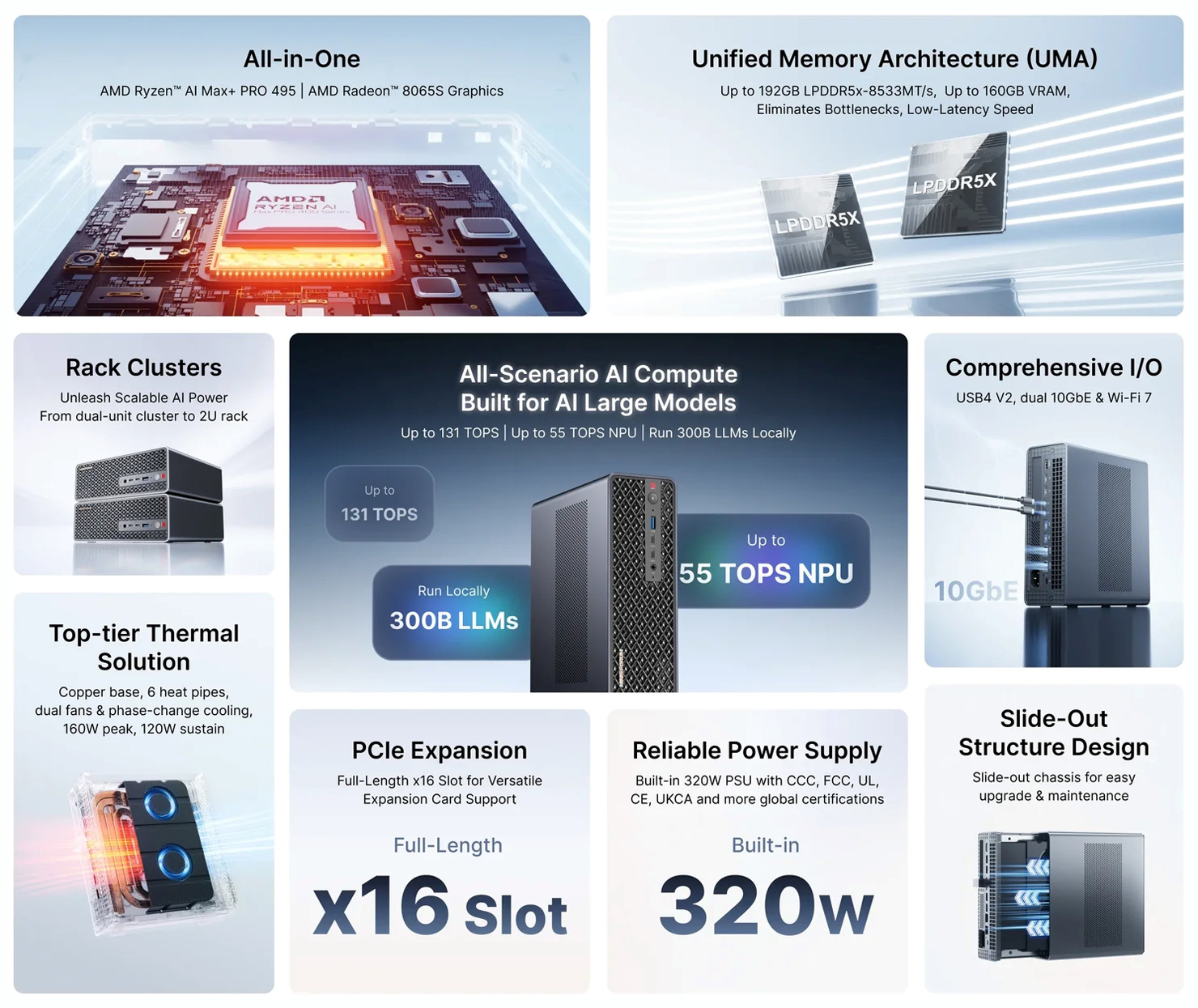
The Minisforum MS-S1 MAX-P495 workstation, shown at IFA 2026 in Berlin.
The memory
192GB of unified LPDDR5X-8533 RAM is the headline spec — 50% more than the 128GB ceiling on the previous PRO 395 model and Lenovo's ThinkCentre X Ultra. Up to 160GB of that pool can be allocated directly to the GPU, which is what makes running giant language models (LLMs) feasible on a desktop. Models that previously demanded professional server accelerators now fit in something that sits on a desk.
Minisforum shared internal benchmark numbers to back the claim. The DeepSeek V4 Flash model at 284 billion parameters (Q4 quantization) runs at roughly 15 tokens per second. A 122-billion-parameter model in Q8 quantization hits 27 tokens per second, with a 131,000-token context window supported at that size. The company also tested a four-unit cluster running Qwen 397B — a 671-billion-parameter model — at usable speeds, pointing at a 2U rack deployment path for small enterprises.





The price and availability
Sales are expected to begin in September 2026. The Minisforum UK store is live with a product page, though no confirmed UK SKU pricing has been posted yet. The ~€7,000 figure comes from Minisforum's own teaser; regional pricing for the US and UK is expected closer to launch, per Wccftech.
For UK buyers, the data-residency angle is real: running models locally means sensitive data never leaves the building — relevant for SMEs navigating post-Brexit data rules. For US researchers and creative studios, it's an argument against discrete GPU economics; a single Nvidia RTX 5090 can't match 192GB of addressable VRAM regardless of clock speed.
The catch: every benchmark published so far comes from Minisforum itself. Independent reviews haven't landed yet, so treat the token-per-second figures as a starting point rather than a settled verdict.


