NASA's NextSTEP-3 Wants Private Companies to Build the Moon's Infrastructure

NASA is no longer just drawing up lunar base concepts — it wants contractors to start building the real thing. On September 8, the agency launched NextSTEP-3, a solicitation program targeting the five core technologies needed to sustain humans at the Moon's South Pole. The stakes are concrete: China has announced a crewed lunar base by 2030, and the U.S. needs mature, tested hardware — not studies — to stay ahead.
The five pillars
The South Pole wasn't chosen for scenery. It holds deposits of water ice that could be converted into breathable oxygen and rocket propellant, drastically cutting the cost of keeping astronauts alive and resupplied. But the environment is punishing — extreme temperature swings and radiation levels that standard Earth-built hardware can't survive. NextSTEP-3 targets five technologies designed specifically for those conditions:
- Vertical solar arrays. Sunlight hits the South Pole at an extremely low angle, making flat panels nearly useless. NASA wants tall tower-mounted arrays that can generate, store, and distribute power reliably. - Oxygen from regolith. Lunar soil — technically called regolith — contains oxygen locked in minerals. Extracting it on-site (a process known as ISRU, In-Situ Resource Utilization) means fewer supply runs from Earth. - Stirling radioisotope generators. These devices convert heat from radioactive decay into electricity, making them essential for operating inside permanently shadowed craters or surviving the two-week lunar night when solar power fails entirely. - In-space manufacturing. Printing or assembling components on orbit or on the surface eliminates months-long waits for Earth-launched cargo. - Nanomaterials. Next-generation lightweight, durable materials for construction and long-term base operation.
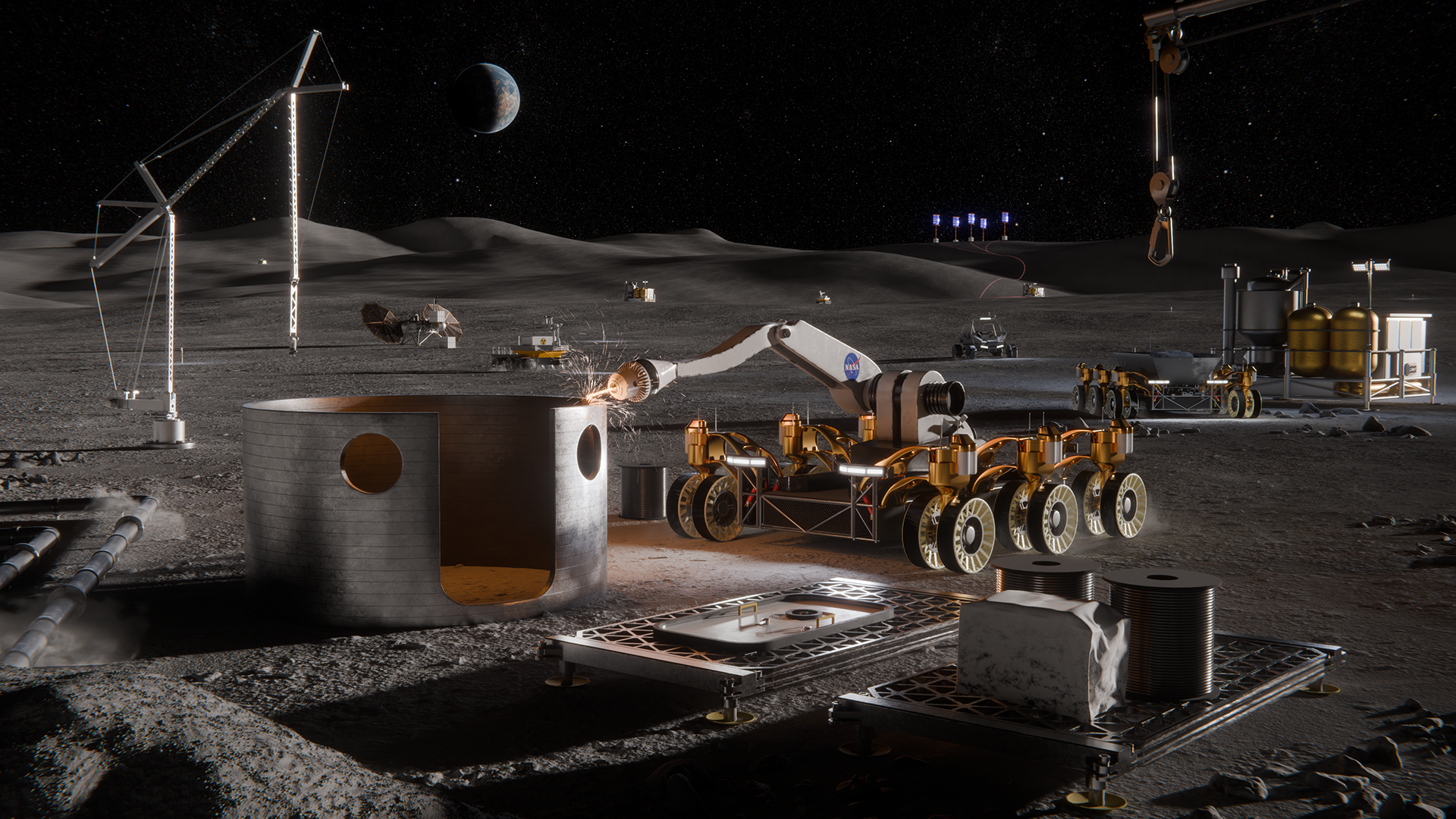
Concept illustration of infrastructure elements and technologies for operations on the lunar surface. Illustration: NASA
The competitive pressure
NASA is explicit that this is more than a research call. The agency frames NextSTEP-3 as strengthening the U.S. industrial base — language that aligns with CHIPS Act-style domestic supply chain priorities. Only U.S.-led teams can submit primary bids; international partners, including European firms, can participate but only through a U.S. prime contractor. That structure keeps critical technology development onshore.
The timing responds directly to China's 2030 moon base target and its ILRS partnership with Russia. For companies like SpaceX, Blue Origin, and Intuitive Machines — as well as smaller startups — NextSTEP-3 raises the bar: functional prototypes are required, not concept papers. The shift from planning to procurement is the clearest signal yet that NASA's Artemis program intends to be on the Moon to stay.


